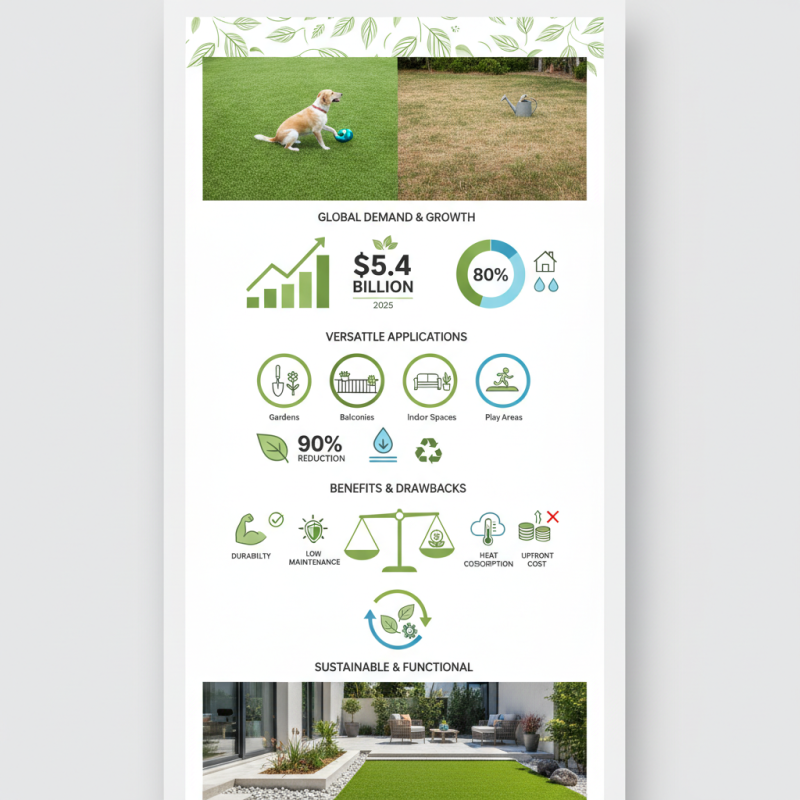
Artificial Grass Decoration is revolutionizing landscaping and interior design. With the global artificial turf market projected to reach $5.4 billion by 2025, its demand is surging. Consumers seek aesthetically pleasing alternatives that require less maintenance. A study shows that over 80% of homeowners prefer artificial grass for its durability and low water requirement.
The versatility of Artificial Grass Decoration makes it suitable for various applications, from gardens to balconies and even indoor spaces. It adds a touch of nature without the hassle of upkeep. Using artificial grass can result in a 90% reduction in water usage compared to natural lawns. This aligns with sustainable practices that are increasingly prioritized.
However, it's crucial to reflect on some drawbacks. While artificial grass is durable, it can heat up significantly in direct sunlight. Also, its installation can be costly upfront. Understanding these aspects is essential for homeowners contemplating this option. Despite these challenges, the benefits often outweigh the negatives, creating a beautiful and functional space.
Artificial grass decoration has become increasingly popular in recent years. Many homeowners and businesses are exploring its aesthetic appeal. According to a report by MarketsandMarkets, the global artificial grass market is expected to reach $5.4 billion by 2023. This growth indicates a significant shift towards more sustainable and low-maintenance landscaping solutions.
Artificial grass is visually appealing and practical. It is made from durable synthetic fibers that mimic the look of natural grass. Unlike natural grass, it doesn’t require mowing, watering, or fertilizing. This can lead to substantial water savings. An estimated 30-50% reduction in water usage is common for properties that switch to artificial grass. In urban areas, it can also help reduce heat island effects, enhancing city landscapes.
Yet, there are considerations to reflect on when using artificial grass. While it saves time and resources, it may lack the same ecological benefits as natural grass. Some studies suggest that synthetic materials can retain heat, affecting nearby plants. Furthermore, concerns about its long-term environmental impact require attention. Exploring local regulations and recycling options is essential for eco-conscious consumers. Engaging with knowledgeable professionals can provide insights into successful installation and maintenance practices.
: Artificial grass can be used to enhance aesthetic appeal in various spaces, like patios or play areas.
It requires significantly less maintenance, saving homeowners time and costs related to mowing and watering.
Types vary from soft and lush for play areas to shorter, flat varieties ideal for urban landscapes and rooftops.
Yes, it's suitable for indoor spaces such as kids’ rooms or sunrooms, creating a gentle outdoor feel.
Reflect on durability, appearance, and potential maintenance challenges to ensure it fits your decorative vision.
Yes, concerns exist regarding the production and disposal of synthetic materials, making thoughtful selection important.
It’s great for patios or pool areas and can create small green nooks, transforming urban settings.
If not chosen carefully, it may appear unnatural, detracting from the overall aesthetic of the space.
Proper installation is key, so seeking professional advice might help ensure longevity and functionality.
While it offers convenience, it’s important to reflect on both aesthetic appeal and environmental impact for balanced choices.
Artificial Grass Decoration refers to the use of synthetic grass in various design projects to enhance aesthetics and functionality. This innovative material comes in various types suited for decorative purposes, including different textures, colors, and heights, enabling homeowners to choose the best fit for their space. Creative applications range from indoor areas like living rooms and playrooms to outdoor settings such as patios, gardens, and even vertical walls, providing a lush green look without the hassle of maintenance associated with natural grass.
The advantages of using Artificial Grass Decoration include its durability, low maintenance requirements, and year-round greenery, making it an appealing alternative for those looking to elevate their home design. Regular care tips, such as occasional cleaning and checking for damage, can ensure longevity. Overall, incorporating artificial grass into home decor is not only a stylish choice but also a practical one, enhancing both comfort and visual appeal.

 Deyuan Industry