Who Makes the Best Artificial Green Wall Panels in China?

Time:2026-09-27 Author:Oliver
0%

Choosing who makes the best Artificial Green Wall Panels in China depends on where the panels will be installed and how they must perform. A shaded office lobby has different needs from a sunlit restaurant terrace. Buyers should compare foliage density, color variation, backing strength, UV resistance, and how securely each panel connects. Photos can help. They cannot tell the whole story.

A careful supplier review looks beyond polished product images. Request physical samples, close-up photographs of the backing, and clear specifications for materials and maintenance. For outdoor projects, ask how the panels handle prolonged sunlight and changing weather. For public or commercial spaces, request relevant fire-performance documentation and confirm that it matches the project’s requirements. Details matter.

Consistency matters, too. Compare panels from different production batches, inspect edges and attachment points, and ask how replacements are handled. A low price may be attractive, but it means little if colors vary or panels arrive with loose leaves. Small flaws show.

This outline examines Chinese manufacturers through product quality, customization, production capacity, communication, and after-sales support. It also considers what buyers can verify before placing an order, including sample checks and written specifications. No single maker is best for every project. Some details remain difficult to judge until installation, and that uncertainty deserves honest attention. The aim is not to crown a winner from marketing claims, but to help readers identify suppliers whose evidence, products, and service fit their specific needs.
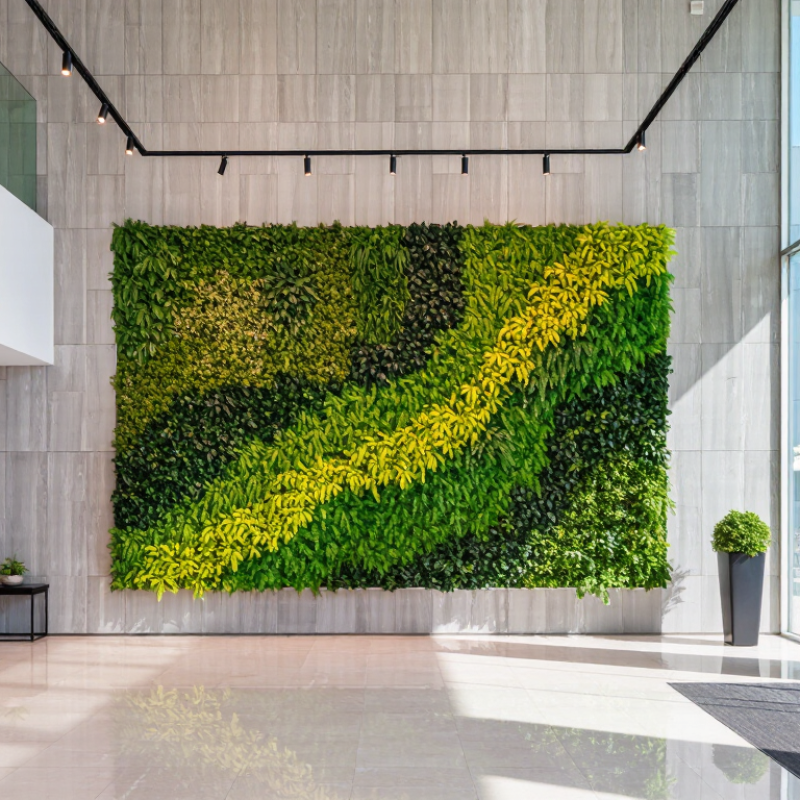
Who Makes the Best Artificial Green Wall Panels in China?

What Artificial Green Wall Panels Are and How They Are Made

Artificial green wall panels are modular sheets of synthetic foliage fixed to a supporting grid. They create a leafy surface without soil, irrigation, or plant growth. No soil is involved. Most panels use molded polyethylene or polypropylene leaves attached to a plastic mesh, though materials and construction vary. Manufacturers typically form foliage by injection molding, add color or surface texture, then fasten individual pieces to the grid. Close up, leaf edges and repeated shapes can reveal the imitation. That is worth checking in person.

The process is practical, not magical. A panel’s appearance depends on leaf density, color variation, backing strength, and how securely its parts connect. For outdoor use, buyers should check whether the foliage has UV protection and whether the manufacturer provides relevant test documentation. Specifications differ, so “weather-resistant” alone says little. Grand View Research estimated the global artificial plants market at about US$1.6 billion in 2023, with projected growth through 2030. This is a broad category, not a panel-only figure, but it signals sustained commercial interest. Still, market growth does not prove product quality. Ask for material details, sample panels, and installation guidance before choosing. A neat sample may hide weak clips. That can be frustrating.

Who Makes the Best Artificial Green Wall Panels in China? What They Are and How They’re Made

Artificial green wall panels are modular panels of synthetic foliage attached to a backing, often made from polymer. A typical production workflow is shown below; exact materials and methods vary by product. The numbers indicate process order, not cost or quality. When comparing manufacturers, consider UV resistance, foliage attachment, material specifications, and relevant fire-safety documentation.

How to Evaluate Chinese Artificial Green Wall Panel Manufacturers

Evaluating Chinese artificial green wall panel manufacturers takes more than comparing catalog photos. Request a physical sample and inspect it in daylight and under indoor lighting. Check whether leaf colors look consistent, stems stay attached when gently pulled, and the backing lies flat without sharp edges. Small details matter.

Ask for material specifications, UV-resistance data, and test reports relevant to your installation. Verify that documents match the exact panel model, not just a similar product. If panels will be used outdoors, ask how the maker tests color fading and brittleness after exposure. A short showroom visit can reveal useful details: organized production areas, labeled batches, and clear inspection records. Still, a tidy factory does not guarantee every shipment will match.

Discuss quality control in practical terms. Who checks panel dimensions, leaf coverage, and packaging before dispatch? Ask for photos or records from a recent production run, then compare them with your approved sample. Looks matter. So do lead times, replacement policies, and packaging that protects corners during transport. Request a small trial order when possible; it may expose color variation or fitting problems. No single checklist is perfect, and even a good sample can raise questions rather than settle them.

Who Makes the Best Artificial Green Wall Panels in China? - How to Evaluate Chinese Artificial Green Wall Panel Manufacturers

Use this scorecard to compare suppliers on verifiable product and service criteria. It is an evaluation framework, not a ranking of specific manufacturers. Score each criterion from 1 (poor or no evidence) to 5 (strong, relevant evidence). Weighted points = criterion weight × score ÷ 5.

Evaluation criterion Weight Evidence to request What a strong result looks like Score (1–5) Weighted points
UV and color stability 15% Test report for the offered foliage or panel, including test method, exposure conditions, and results. Evidence relates to the quoted product and intended indoor or outdoor use; limitations of accelerated testing are clearly stated. — —
Fire performance 15% Fire-test documentation and the applicable standard or classification for the destination market. The report identifies the tested material and configuration; the buyer confirms it meets local project requirements. — —
Material and safety documentation 10% Material specifications and any relevant chemical, emissions, or restricted-substance test reports. Documents are current, traceable to the product being quoted, and suitable for the intended application. — —
Appearance and sample consistency 10% Physical samples, product photos, color references, and a sample-to-production approval process. Foliage density, color, finish, and panel appearance meet the approved sample across the order. — —
Panel construction and durability 10% Panel dimensions, backing material, connection details, and inspection of a physical sample. Panels connect securely, foliage is firmly attached, and construction suits the specified installation conditions. — —
Installation compatibility 10% Installation instructions, fixing options, panel layout guidance, and project-specific technical answers. Guidance covers the proposed substrate, fixing method, edge finishing, and any relevant site conditions. — —
Customization and specification control 8% Written specifications for available panel sizes, foliage mixes, colors, and approved custom options. The supplier confirms what can be customized and records agreed specifications before production. — —
Quality control and traceability 8% Inspection checklist, batch identification, defect-handling process, and pre-shipment inspection options. Acceptance criteria are defined in advance and inspection findings can be linked to the order. — —
Commercial and shipping clarity 7% Itemized quotation, lead-time assumptions, packaging details, and agreed delivery terms. Scope, exclusions, shipment responsibilities, and changes to timing or cost are clearly documented. — —
Warranty and after-sales support 7% Written warranty terms, exclusions, claim procedure, and replacement or remedy process. Coverage and response responsibilities are specific, documented, and appropriate to the product’s intended use. — —
Total 100% Compare suppliers using the same project requirements and evidence standard. — — / 100

Note: Test results and certificates should be checked for scope, date, issuing body, and correspondence to the exact product configuration. Requirements vary by application and destination market.

Which Chinese Manufacturers Lead in Quality and Product Range

Chinese manufacturers leading in quality and product range tend to offer more than dense, photo-ready foliage. Look for panels with secure leaf attachment, consistent color, and backing that sits flat against a wall. A useful sample check is simple: bend a corner, tug several leaves gently, and inspect the seams. Details matter.

A broad range may include fern, boxwood, ivy, and mixed-leaf designs, with different panel sizes and foliage depths. This helps buyers match a shaded lobby, shop display, or covered patio without forcing every project into one look. Ask whether color and dimensions remain consistent across repeat orders. A large catalog alone proves little.

Outdoor performance needs careful checking. Ask for test information on UV exposure, fading, and temperature changes, and confirm whether the stated results apply to the exact panel being quoted. Claims can sound reassuring; samples sometimes tell a less tidy story. I would compare panels in daylight and under indoor lighting before choosing. Packaging, replacement-piece availability, and clear installation guidance also reveal how thoughtfully a supplier supports real projects.

How Leading Suppliers Compare on Customization, Pricing, and Service

Choosing a Chinese supplier for artificial green wall panels means comparing more than catalog photos. Ask for panel dimensions, foliage density, UV-resistance test details, and replacement-leaf availability. A 50-by-50-centimeter sample can reveal gaps, plastic shine, and how securely stems attach. Small details matter.

Customization is useful when walls include corners, signage, or irregular openings. Request a measured layout, color samples, and a written specification before approving production. Compare quotes by panel area, backing material, packaging, and shipping terms; a lower unit price may exclude useful extras. Lead times and sample charges should be confirmed in writing. Service is visible in the reply: does the supplier answer technical questions clearly and explain how damaged panels are handled?

Evidence helps set realistic expectations. Interface’s 2015 Human Spaces report surveyed 7,600 office workers across 16 countries. Respondents with natural elements in their workplaces reported 15% higher wellbeing, 6% higher productivity, and 15% greater creativity. These are survey associations, not proof that artificial foliage causes those outcomes. Faux panels also lack living plants’ air-quality benefits. Worth considering. Ask suppliers for material and fire-performance documentation relevant to the project, then verify claims independently. A neat sample is not the whole wall.

How to Choose the Best Manufacturer for Your Project

Choosing a manufacturer starts with the installation conditions, not a catalogue image. Record wall dimensions, sunlight exposure, cleaning access, and whether panels will sit near entrances or heat sources. Ask for a full-size sample; small swatches hide seams and uneven leaf density. A sample can still mislead. Request documented tests for UV aging, color stability, material composition, and fire performance relevant to the project. Check how panels attach to the wall, and ask for installation drawings and replacement-part availability. These details matter more than a broad “weatherproof” claim.

Compare suppliers using written specifications and recent production samples. The 2015 Human Spaces report surveyed 7,600 office workers and associated workplaces with natural elements with 15% higher reported wellbeing and 6% higher productivity. That finding concerns natural elements; it does not prove artificial panels create the same effects. Treat the figures as context, not a sales guarantee. Ask manufacturers about batch consistency, panel weight, lead times, and how they handle color variation between orders. Request references for projects with similar exposure and scale. Then inspect joints, backing, and foliage attachment yourself. A neat showroom panel may not survive a sunny exterior wall. I would also leave room for doubt: test a small installed section before approving a large order.

FAQS

What should I inspect in an artificial green wall sample?

Check leaf color in daylight and indoor lighting. Gently tug several leaves, inspect the seams, and confirm the backing lies flat. A small sample can hide problems.

Which documents should I request from a manufacturer?

Ask for material specifications, UV-resistance data, and relevant test reports. Confirm every document matches the exact panel model being quoted.

How can I assess panels intended for outdoor use?

Ask about tests for UV exposure, fading, brittleness, and temperature changes. Compare the results with a sample, since broad performance claims may not tell the whole story.

What details matter when comparing product ranges?

Look at foliage styles, panel sizes, and leaf depth. Fern, ivy, and mixed-leaf designs may suit different spaces, but a large catalog alone proves little.

How can I check quality control before ordering?

Ask who checks dimensions, leaf coverage, and packaging. Request recent production photos or records, then compare them with your approved sample.

What should I confirm about repeat orders?

Ask whether color and dimensions stay consistent across batches. Check lead times, replacement-piece availability, and how corner damage during shipping is handled.

How do I choose panels for a specific installation?

Record wall dimensions, sunlight, cleaning access, and nearby heat sources. Request installation drawings and check how the panels attach to the wall.

Does research on natural elements prove artificial panels improve wellbeing?

No. One cited workplace survey associated natural elements with reported wellbeing and productivity, but it did not establish the same effects for artificial panels.

Is a showroom visit enough to judge a manufacturer?

No. A tidy production area and neat sample are useful clues, not guarantees. Inspect a small installed section before approving a large order.

Conclusion

Artificial Green Wall Panels offer a practical way to bring a consistent, leafy appearance to indoor and outdoor spaces without the ongoing care required by living plants. They are generally made by attaching artificial foliage to backing materials, with differences in leaf variety, panel construction, durability, and finish affecting their suitability for different projects. When comparing manufacturers in China, buyers can assess material quality, production consistency, product range, customization options, pricing transparency, and the support available before and after purchase.

Leading suppliers may differ in how much they can tailor panel size, foliage combinations, colors, and installation details, so the best choice depends on the project’s design, environment, budget, and schedule. Before placing an order, request clear product specifications and samples, confirm production and delivery expectations, and compare service terms as well as price. A careful evaluation helps identify a manufacturer whose products and capabilities match the project’s priorities.


Oliver

Oliver

Oliver is a seasoned marketing professional with a wealth of expertise in driving brand awareness and engagement. With a deep understanding of our company's product offerings, he consistently delivers high-quality content that enriches our professional blog. His insights not only shed light on......