Why Choose Landscaping Artificial Grass for Your Project?
Landscaping Artificial Grass is moving beyond sports fields and into courtyards, rooftops, balconies, and commercial entrances. Grand View Research valued the global artificial turf market at approximately $3.74 billion in 2023. It also projects continued growth through 2030. That expansion reflects practical pressure: water restrictions, rising maintenance costs, and the demand for attractive outdoor spaces throughout the year.
The U.S. Environmental Protection Agency reports that outdoor water use can represent nearly 30% of household water consumption. In dry regions, the share may become much higher. Artificial grass can reduce mowing, edging, and routine irrigation. It also keeps a consistent green appearance beside a pool or beneath a shaded patio. No muddy footprints.
However, it is not a perfect substitute for living plants. Installation requires proper drainage, stable subgrade preparation, and responsible material selection. Poorly designed surfaces may become hot, retain odors, or drain badly after heavy rain. That detail matters.
Dr. John C. Sorochan, a University of Tennessee turfgrass scientist, has described synthetic turf as “not maintenance-free, but maintenance-different.” His point deserves attention. The lawn may need less water, yet it still requires brushing, debris removal, sanitation, and periodic inspection.
The Synthetic Turf Council’s industry guidance also stresses correct installation and regular care. Therefore, project owners should compare climate, foot traffic, drainage, surface temperature, and life-cycle costs before choosing. The greenest-looking option is not automatically the most responsible one. Careful planning makes Landscaping Artificial Grass a more reliable, realistic project decision.
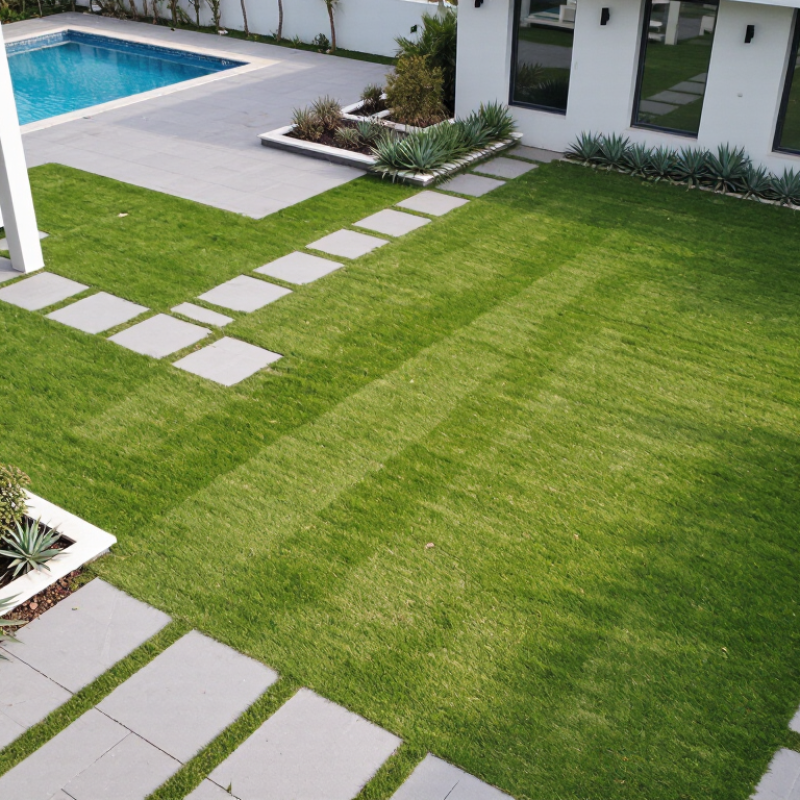
Landscaping artificial grass is a synthetic surface designed to imitate natural turf in gardens, courtyards, balconies, and shared outdoor areas. Its blades are usually made from durable plastic fibers, fixed into a flexible backing. Small drainage holes allow rainwater to pass through the surface instead of pooling above it. Beneath the grass, a compacted stone base provides stability and supports proper drainage. Some installations also use infill to hold the blades upright, improve cushioning, and reduce surface movement.
The installation process matters as much as the grass itself. The ground must be cleared, leveled, and compacted before the base is added. A poorly prepared area may develop dips, loose edges, or standing water. That problem is easy to underestimate. Artificial grass needs less mowing and watering, but it is not maintenance-free. Leaves, soil, and pet debris still require regular removal. Dark surfaces can also become hot under strong sunlight, so shade and occasional rinsing may improve comfort.
Tips: Check drainage after heavy rain. Secure edges firmly. Choose a pile height that suits the space. Shorter fibers often clean more easily, while taller fibers can create a softer appearance. Before installation, test a small section for color, texture, and heat. This simple step may prevent an expensive change of mind.
Artificial grass can create a dependable green surface in gardens, courtyards, balconies, and commercial landscapes. Its main benefit is consistent appearance during dry seasons, heavy use, and changing weather. Unlike natural turf, it does not require mowing, routine fertilizing, or frequent watering. This can reduce maintenance time and support responsible water use. However, it is not completely maintenance-free.
From practical installation experience, preparation often determines long-term performance. A compacted base, suitable drainage, and secure edge restraints help prevent wrinkles and standing water. Quality artificial grass can also tolerate children, pets, and regular foot traffic, but extreme heat may warm the surface. In shaded areas, fallen leaves still need removal. Small details matter.
Tips: Measure the area carefully before ordering materials. Remove unstable soil and build an even, well-drained base. Choose a pile height suited to the project’s traffic level. Test drainage after installation. Clean spills promptly, and brush flattened fibers occasionally. I have seen rushed installations look attractive at first, then develop uneven areas after heavy rain. Allow time for proper ground preparation.
Why Choose Landscaping Artificial Grass for Your Project?
Factors to Consider Before Choosing Artificial Grass
Artificial grass can create a neat, usable landscape without regular mowing or daily watering. However, appearance should not be your only concern. Consider how people, pets, and outdoor furniture will use the area. A soft lawn for children needs different cushioning from a decorative garden border.
Drainage deserves careful attention. After heavy rain, water should move through the grass and underlying base quickly. Poor preparation can leave puddles, odors, or uneven patches. Check the soil, slope, and drainage layer before installation. A professional assessment is worthwhile, especially in wet climates.
Material quality also affects comfort and lifespan. Look at blade density, backing strength, color variation, and resistance to sunlight. Very bright green grass may look artificial beside natural plants. Heat is another practical issue. Dark surfaces can become hot under direct summer sun, so shade and cooling routines may be necessary.
Maintenance is lower, not zero. Leaves still need removal, and high-use areas may require brushing. Pet owners should inspect cleaning requirements carefully. I would not choose artificial grass only because it seems effortless. Installation costs, base preparation, repairs, and eventual disposal all deserve honest consideration.
Request clear product specifications and installation details. Ask how seams are secured and how edges are protected. A sample viewed outdoors is more useful than a small indoor piece. Mistakes happen when buyers judge color under showroom lighting.
Water demand is an important factor when comparing artificial grass with natural turf. The chart estimates seasonal irrigation water use for a 1,000-square-foot lawn, assuming natural turf requires 1 inch of irrigation per week and artificial grass requires no routine irrigation.
Calculation basis: 1 inch of water over 1,000 square feet equals approximately 623 gallons. Actual savings vary according to climate, rainfall, grass species, soil conditions, and installation requirements. Artificial grass may still require occasional cleaning or cooling with water.
Why Choose Landscaping Artificial Grass for Your Project?
Planning starts with the site, not the grass. Measure the area, identify walking routes, and inspect existing drainage. The U.S. EPA WaterSense program reports that outdoor water use can approach 30% of household consumption. Artificial grass can reduce irrigation demand, but it does not solve poor grading or blocked drains. Mark a gentle slope away from buildings. Leave inspection access around downpipes and utility covers. Small details matter.
Remove unstable soil and excavate about 75–100 millimetres. Install a suitable geotextile layer, then add crushed aggregate in compacted lifts. A firm base prevents ripples, although perfect compaction is difficult. I would test drainage before ordering the final turf quantity. The Synthetic Turf Council’s installation guidance stresses proper sub-base preparation, secure seams, and regular maintenance. Use compatible joining tape, perimeter pins, and enough infill to support the blades. Avoid stretching the surface too tightly.
Tips: Request a written drainage plan. Check the sub-base with a straightedge. Keep spare offcuts for future repairs. Rinse dusty areas occasionally, and remove leaves before they decompose. EPA WaterSense guidance also warns that inefficient irrigation wastes significant water, so retaining nearby planting beds still requires careful control. A realistic maintenance plan is better than promising a maintenance-free surface.
Why Choose Landscaping Artificial Grass for Your Project?
Maintenance is often the strongest reason to choose landscaping artificial grass. It removes mowing, routine fertilizing, and much of the irrigation demand. The U.S. Environmental Protection Agency reports that outdoor household water use averages nearly 8 billion gallons daily, mainly for landscape irrigation. However, artificial grass still needs care. Leaves, soil, and pet waste can collect between the blades. Regular brushing, rinsing, and prompt cleaning help preserve drainage and appearance. It is not maintenance-free.
Lifespan depends on ultraviolet exposure, foot traffic, installation quality, and cleaning routines. The Synthetic Turf Council commonly identifies an expected service life of 8 to 15 years for many landscape installations. That range is useful, but not guaranteed. A shaded courtyard may remain attractive longer than a busy, sun-exposed pathway. In practice, weak sub-base preparation can cause ripples or drainage problems before the surface wears out. That detail is easy to underestimate.
Environmental performance requires a broader view. Reduced irrigation can benefit dry regions, while eliminating fertilizers may reduce nutrient runoff. Yet manufacturing, transport, infill replacement, and end-of-life disposal also create impacts. The European Commission’s Product Environmental Footprint method recommends assessing a product across its full life cycle, not only during use. Recyclability varies widely, too. A careful project should compare local rainfall, soil conditions, expected use, and disposal options before installation. The greenest answer is not always the most obvious one.
| Evaluation Dimension | Landscaping Artificial Grass | Natural Grass | Practical Consideration |
|---|---|---|---|
| Routine Mowing | Not required | Typically weekly during active growing periods | Artificial grass eliminates mowing equipment, fuel use, and recurring mowing labor. |
| Watering Requirement | Usually limited to occasional rinsing | Often requires regular irrigation during dry or hot weather | Water demand depends on climate, grass species, soil, rainfall, and irrigation efficiency. |
| Fertilizer and Pesticides | No fertilizer or routine lawn pesticides required | May require seasonal fertilizer and weed or pest control | Reduced chemical inputs can simplify maintenance, although cleaning products may still be needed for spills or pet areas. |
| Routine Cleaning | Remove leaves and debris; rinse as needed | Remove leaves and manage thatch, weeds, and bare spots | Pet installations may need more frequent rinsing and odor-control treatment. |
| Expected Service Life | Approximately 10–20 years | Can persist indefinitely with suitable care, but may need periodic reseeding or replacement | Artificial grass longevity varies with traffic, UV exposure, installation quality, and maintenance. |
| Appearance Consistency | Consistent year-round appearance | Varies with season, weather, disease, drought, and wear | Artificial grass can be useful where a uniform appearance is a priority. |
| Heavy-Traffic Recovery | Fibers may flatten; brushing can help restore appearance | May develop worn or muddy areas and require repair | A suitable base, drainage system, and infill selection are important for high-use areas. |
| Drainage | Permeable when correctly installed over a suitable base | Depends on soil structure, grading, root health, and drainage conditions | Artificial grass is not automatically permeable; seams, sub-base preparation, and site grading affect performance. |
| Water Conservation Potential | Can substantially reduce irrigation demand | Water demand ranges from low to high depending on grass type and climate | The greatest potential savings generally occur when artificial grass replaces a frequently irrigated lawn. |
| Heat Performance | Surface can become hotter than surrounding natural grass in direct sunlight | Usually cooler through evapotranspiration, especially when adequately watered | Shade, ventilation, light-colored materials, and occasional cooling can improve comfort. |
| Carbon and Air Emissions | No routine mowing emissions after installation | May involve emissions from mowing, edging, blowing, irrigation, and material production | The overall environmental balance depends on product manufacture, transport, installation, use, and end-of-life treatment. |
| Material Composition | Usually synthetic polymer fibers with a backing and infill | Living plants supported by soil, water, nutrients, and biological activity | Material selection and responsible disposal should be considered during project planning. |
| Biodiversity Value | Limited habitat and food value unless combined with planted areas | Can support soil organisms and insects, depending on management and plant diversity | Combining artificial grass with trees, shrubs, pollinator plants, or naturalized zones can improve site ecology. |
| End-of-Life Considerations | Removal and recycling options vary by material and local facilities | Biodegradable organic material can return to the soil when managed appropriately | Ask installers about take-back, recycling, and disposal pathways before selecting a system. |
| Best-Fit Applications | Small urban yards, rooftop areas, play spaces, pet zones, and drought-prone landscapes | Large open areas, ecological landscapes, and sites where cooling and habitat are priorities | The best choice depends on climate, intended use, maintenance capacity, drainage, budget, and sustainability goals. |
Note: Figures are typical industry planning ranges rather than guarantees. Actual performance depends on climate, site conditions, installation standards, product construction, traffic, and maintenance practices.
It provides a consistently green surface in gardens, courtyards, balconies, and commercial areas. It reduces mowing, fertilizing, and frequent watering. It saves maintenance time. However, it is not maintenance-free.
Yes. Remove leaves, soil, and pet waste regularly. Rinse dirty areas and brush flattened fibers occasionally. Clean spills promptly. Small tasks still matter.
Remove unstable soil and create a firm, even base. Include suitable drainage and secure edge restraints. Test drainage after installation. Poor preparation can cause ripples and standing water.
Many products tolerate regular play, pets, and daily walking. Select pile height according to expected traffic. Busy pathways may show wear sooner. No surface is indestructible.
Yes, strong sunlight can warm the surface. This matters in exposed play areas and sunny courtyards. Shaded locations usually remain more comfortable. The exact temperature depends on weather and surface conditions.
Many landscape installations last about 8 to 15 years. Lifespan depends on sunlight, traffic, cleaning, and installation quality. A shaded courtyard may last longer than a busy pathway. This range is not guaranteed.
Rushed ground preparation can create uneven areas after heavy rain. Weak bases may cause wrinkles or drainage problems. I have seen attractive installations fail early. Taking extra preparation time is worthwhile.
It can reduce irrigation and eliminate routine fertilizer use. However, manufacturing, transport, replacement materials, and disposal create impacts. Consider rainfall, soil, usage, and local disposal options. The greener choice is not always obvious.
Landscaping Artificial Grass is a synthetic surface designed to provide the appearance and feel of natural lawn while reducing the need for regular watering, mowing, and fertilizing. Its durable fibers are secured to a backing and installed over a prepared base, creating a consistent, green area for gardens, pathways, play spaces, and other outdoor projects. It can offer reliable performance in different weather conditions and maintain its appearance throughout the year.
Before choosing artificial grass, consider the intended use, local climate, drainage needs, surface size, color, texture, and installation budget. Proper planning includes clearing the area, leveling the ground, adding a stable drainage base, carefully fitting the material, and securing its edges. Routine maintenance usually involves removing debris, rinsing the surface, and addressing occasional stains or uneven areas. With suitable care, the surface can remain functional for many years. Environmental factors, including water savings, material longevity, drainage, and responsible disposal, should also be evaluated before installation.

Deyuan Industry